Vaisakhi 2026: Date, History & How Punjab Celebrates April 14
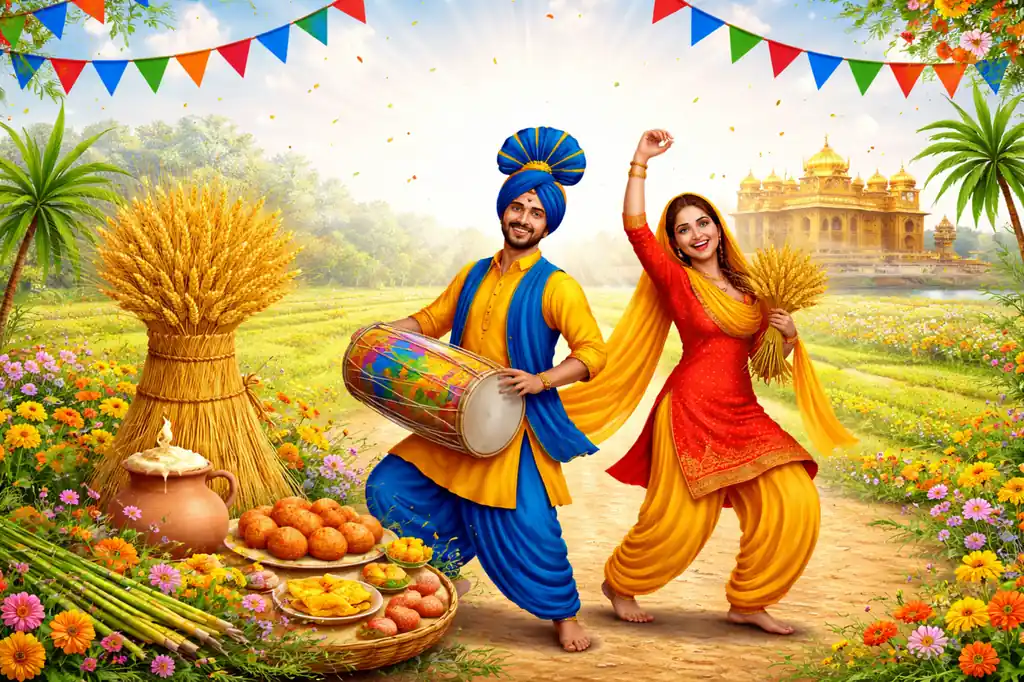
Vaisakhi 2026 falls on Tuesday, April 14. Punjab marks this day three ways at once — harvest festival, Punjabi New Year, and the anniversary of one of Sikhism’s most defining moments. No other festival in North India carries this much weight on a single date.
What Vaisakhi Actually Marks
Most people call Vaisakhi a harvest festival. That’s only one-third of the story.
April 14 carries 3 distinct meanings — each one standing independently, each one celebrated by a different group for entirely different reasons.
Meaning 1: The Rabi Harvest Punjab’s wheat fields turn gold every April. Farmers cut their rabi crop — the winter wheat sown in October — and celebrate the yield. This tradition predates Sikhism by centuries. Hindu farmers in Punjab observed this agricultural milestone long before 1699.
Meaning 2: The Punjabi Solar New Year April 14 marks the first day of Vaisakh in the Bikrami solar calendar. This makes Vaisakhi the Punjabi equivalent of what Ugadi is to Karnataka, Vishu to Kerala, and Pohela Boishakh to Bengal. Every major Indian region celebrates its own solar new year — Punjab’s falls on this date.
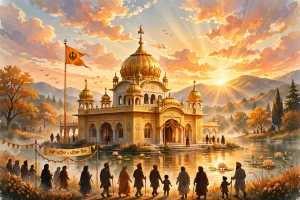
Meaning 3: The Birth of the Khalsa This is the meaning that transformed Vaisakhi from a regional festival into a global event. On April 13, 1699, Guru Gobind Singh Ji gathered thousands at Anandpur Sahib and changed Sikh history permanently.
April 13, 1699 — The Day Everything Changed
Guru Gobind Singh Ji stood before 80,000 people at Anandpur Sahib and drew his sword.
He asked one question: who here is willing to give their life for their faith? The crowd fell silent. He asked again. Then a third time.
One man stepped forward. Guru Gobind Singh Ji took him inside a tent. Moments later, the Guru emerged — sword dripping red. He asked again. Another man volunteered. Then three more.
The crowd believed all 5 men were dead. They were not. The Guru brought all 5 men — the Panj Pyaras — back out, alive and transformed.
These 5 men became the founding members of the Khalsa Panth. Their names were:
- Daya Ram (later Daya Singh) — Lahore, Punjab
- Dharam Das (later Dharam Singh) — Hastinapur, UP
- Himmat Rai (later Himmat Singh) — Jagannath Puri, Odisha
- Mohkam Chand (later Mohkam Singh) — Dwarka, Gujarat
- Sahib Chand (later Sahib Singh) — Bidar, Karnataka
These 5 men came from 5 different castes and 5 different regions of India. That was deliberate. Guru Gobind Singh Ji baptized them with Amrit — a ceremony called Amrit Sanchar that Sikhs still perform today.
Then he did something no Guru had done before. He asked the Panj Pyaras to baptize him in return. The Guru became a student of his own students. This act established equality as the foundation of the Khalsa.
In 2026, Vaisakhi marks 327 years since this event.
The Five Ks — What They Mean Today
Every baptized Sikh wears 5 articles of faith — called the Panj Kakars. Guru Gobind Singh Ji established all 5 on Vaisakhi day in 1699.
1. Kesh — Uncut Hair Kesh represents acceptance of God’s creation in its natural form. Baptized Sikhs do not cut any hair on their body. Men cover their Kesh with a Dastar (turban) — a symbol of Sikh identity recognized worldwide.
2. Kangha — Wooden Comb The Kangha is worn in the hair at all times. It represents cleanliness and order. It reminds Sikhs that spiritual life requires active maintenance — not passive belief.
3. Kara — Steel Bracelet The Kara is worn on the right wrist. Steel symbolizes strength. The circular shape represents eternity — no beginning, no end. Most Sikhs, even non-baptized ones, wear the Kara as a cultural identifier.
4. Kachera — Cotton Undergarment The Kachera is a specific style of cotton shorts worn as an undergarment. It represents self-control and moral discipline. It also allowed warriors to move freely in battle.
5. Kirpan — Steel Sword The Kirpan is a ceremonial sword worn in a fabric sheath. It represents the duty to defend the weak and stand against injustice. In India, baptized Sikhs have legal permission to carry the Kirpan under the Arms Act, 1959.
How India Celebrates Vaisakhi 2026
Vaisakhi celebrations in India center on 3 locations above all others — Amritsar, Anandpur Sahib, and Haridwar.
Golden Temple, Amritsar
Harmandir Sahib receives over 100,000 pilgrims on April 14 every year. The Nagar Kirtan procession begins at approximately 9:00 AM from the Gurdwara complex. It winds through Hall Bazaar, Bazar Mai Sewa, and returns via Saran Gate over 3-5 hours.
Fireworks over the sarovar happen between 8:00 PM and 10:00 PM on the night of April 14.
Best time for darshan: 3:00 AM – 5:30 AM (Amrit Vela). Post-9 AM queues stretch 1-2 hours.
Anandpur Sahib
Anandpur Sahib in Rupnagar district, Punjab, is where the Khalsa was born on April 13, 1699. Every Vaisakhi, Nihang Sikhs demonstrate traditional martial arts — horsemanship, swordsmanship, and archery — in a display called Gatka.
Haridwar
Approximately 5 million pilgrims travel to Haridwar every Vaisakhi. They take a holy dip at Brahm Kund in the River Ganga. Hindu texts connect Vaisakhi to the day Goddess Ganga descended from the heavens to earth.
Vaisakhi on the Desi Punjabi Calendar
Vaisakhi and Vaisakh Sangrand fall on the same day — April 14, 2026.
Sangrand marks the first day of every month in the Desi Punjabi calendar. Vaisakh Sangrand is the most important of the 12 Sangrands because it opens the new Bikrami year.
| Desi Calendar Event | تاریخ | دن |
|---|---|---|
| تہوارVaisakhi / Vaisakh Sangrand | تاریخ 14 اپريل 2026 | دنمنگل |
| تہوارVaisakh Puranmashi | تاریخ 12 اپريل 2026 | دناتوار |
| تہوارVaisakh Masya | تاریخ 27 اپريل 2026 | دنپیر |
| تہوارJeth Sangrand | تاریخ 15 مئی 2026 | دنجمعہ |
| تہوارJeth Masya | تاریخ 27 مئی 2026 | دنبدھ |
| تہوارHarh Sangrand | تاریخ 15 جون 2026 | دنپیر |
| تہوارGurpurab — Guru Arjan Dev Ji | تاریخ 16 مئی 2026 | دنہفتہ |
The Bikrami calendar year 2083 begins on this day. The calendar has tracked Punjab’s agricultural and religious cycle for over 2,000 years.
👉 Check all Sangrand Dates 2026 👉 مسیا تاریخ 2026 👉 پورنمشی کی تاریخیں 2026
Traditional Food, Dance & Rituals
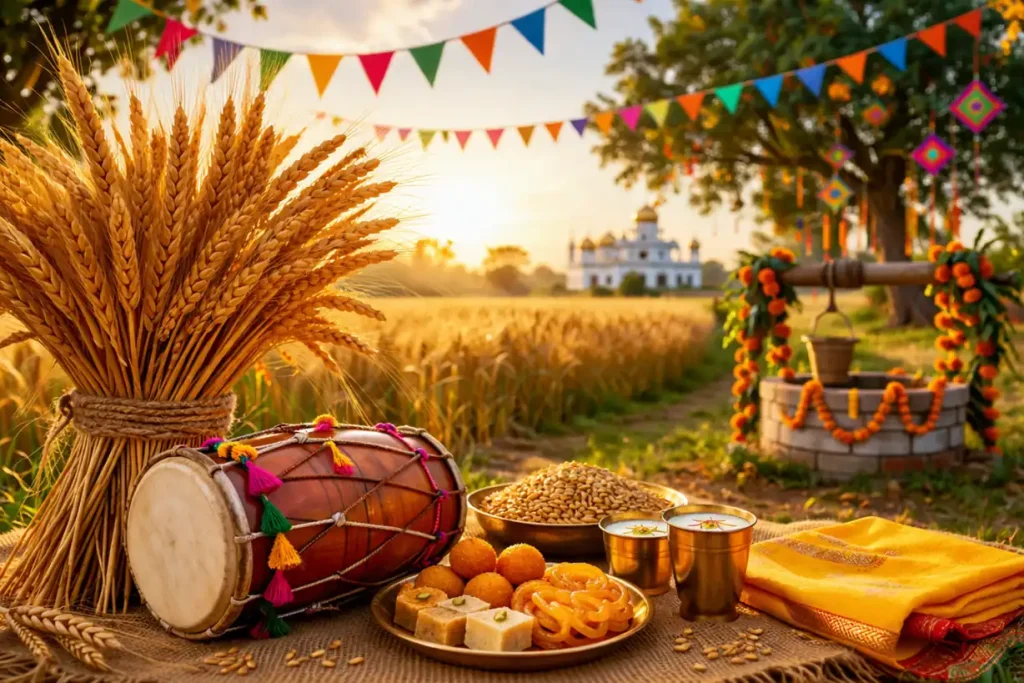
3 rituals define how Punjab physically celebrates Vaisakhi — Awat Pauni, Nagar Kirtan, and Langar.
Awat Pauni — Community Harvest
Awat Pauni is the traditional act of harvesting wheat together as a community. Farmers gather in fields at sunrise. Dhol drums beat a steady rhythm. Everyone cuts wheat in unison while singing folk songs.
Bhangra and Gidda
Bhangra is Punjab’s most recognizable export to the world. Men perform high-energy moves to fast dhol beats. Women perform Gidda — a slower, expressive dance involving clapping rhythms and folk poetry called Boliyaan.
Langar — The Open Kitchen
Every Gurdwara serves free food to every visitor on Vaisakhi — regardless of religion, caste, or nationality. The Golden Temple’s langar feeds over 100,000 people daily during Vaisakhi.
Traditional Foods
- Kheer — rice pudding offered as prasad
- Makki di Roti with Sarson da Saag
- Kada Prasad — sweet semolina distributed at Gurdwaras
- Lassi — sweet yogurt drink served in clay pots
- Pinni — wheat flour and jaggery sweet
Vaisakhi vs Baisakhi — The Name Debate
Both words refer to exactly the same festival on exactly the same date.
In standard Punjabi, the letters V (ਵ) and B (ਬ) are interchangeable in certain dialects. The Doabi and Malwai dialects substitute B for V — so Vaisakhi becomes Baisakhi. Hindi-speaking regions of Haryana and Delhi use Baisakhi more commonly. Punjab uses Vaisakhi.
The festival name comes from the month Vaisakh — derived from the Sanskrit word for the star Vishakha. One festival, one date, two names.
عمومی سوالات
Upcoming Punjabi Calendar Dates After Vaisakhi
| تہوار | تاریخ | دن |
|---|---|---|
| تہوارVaisakhi / Vaisakh Sangrand | تاریخ 14 اپريل 2026 | دنمنگل |
| تہوارVaisakh Puranmashi | تاریخ 12 اپريل 2026 | دناتوار |
| تہوارVaisakh Masya | تاریخ 27 اپريل 2026 | دنپیر |
| تہوارJeth Sangrand | تاریخ 15 مئی 2026 | دنجمعہ |
| تہوارJeth Masya | تاریخ 27 مئی 2026 | دنبدھ |
| تہوارHarh Sangrand | تاریخ 15 جون 2026 | دنپیر |
| تہوارGurpurab — Guru Arjan Dev Ji | تاریخ 16 مئی 2026 | دنہفتہ |
Final Thoughts
Vaisakhi 2026 lands on April 14 — a Tuesday that Punjab has circled on its calendar for months. Whether you stand at the Golden Temple at 4 AM, watch the Nagar Kirtan from Hall Bazaar, or sit with family around a table of makki di roti and saag, the day carries 327 years of history in every celebration.
Vaisakhi diyan lakh lakh vadhaiyan!