Bhai Dooj 2026: Date, Tilak Muhurat, Rituals and Significance
Bhai Dooj is the festival that celebrates the bond between brothers and sisters. It comes two days after Diwali, at the end of the five-day Diwali festival, when sisters apply a tilak on their brothers’ foreheads, pray for their long life and well-being, and brothers give gifts and promise protection in return.
In 2026, Bhai Dooj falls on Wednesday, 11 November. This guide covers the date, the tilak muhurat, the Dwitiya tithi timings, the rituals, the legends behind the festival, and how it is celebrated across India.
When Is Bhai Dooj in 2026?
Bhai Dooj 2026 falls on Wednesday, 11 November 2026. It is observed on Dwitiya, the second day of the Shukla Paksha (bright fortnight) in the Hindu month of Kartik.
One date note matters this year. The Dwitiya tithi begins on the afternoon of Tuesday, 10 November, so a few calendars list 10 November. The festival itself is observed on 11 November, because the tilak is performed in the afternoon (Aparahna) window, and Dwitiya is still running during that window on the 11th. The date is also later than usual in 2026 because the Hindu lunar calendar includes Adhika Jyeshtha, an extra month that shifts later festivals forward. Copying an October date from another year would give the wrong 2026 date.
Bhai Dooj 2026 Tilak Muhurat and Tithi Timings
The most important timing of the day is the Aparahna muhurat, the afternoon window in which the tilak ceremony is traditionally performed.
| Detail | Timing |
|---|---|
| Festival date | Wednesday, 11 November 2026 |
| Dwitiya tithi begins | Tuesday, 10 November 2026 at 2:00 PM |
| Dwitiya tithi ends | Wednesday, 11 November 2026 at 3:53 PM |
| Tilak muhurat, New Delhi (Aparahna) | 1:10 PM to 3:20 PM on 11 November |
| Duration | 2 hours 10 minutes |
Timings are in Indian Standard Time and follow Drik Panchang calculations for New Delhi. Panchang sources differ by a few minutes on the muhurat, so treat the window above as the New Delhi reference and check a local panchang for your city.
| City | Tilak muhurat (Aparahna) |
|---|---|
| New Delhi | 1:10 PM to 3:20 PM |
| Mumbai | 1:30 PM to 3:46 PM |
| Kolkata | 12:27 PM to 2:41 PM |
| Bengaluru | 1:13 PM to 3:32 PM |
| Hyderabad | 1:08 PM to 3:25 PM |
City timings are approximate panchang-based calculations and shift slightly by location. If you miss the Aparahna window, families generally still perform the tilak while Dwitiya is running, following their own family tradition.
What Is Bhai Dooj?
Bhai Dooj, also written Bhai Duj, marks the love, duty and protection between a brother and a sister. The name combines Bhai (brother) and Dooj (the second day, Dwitiya, of the lunar fortnight).
It is known by several regional names across India and Nepal: Bhai Phonta in West Bengal, Bhai Tika in Nepal, Bhau Beej in Maharashtra, and Bhratri Dwitiya or Yama Dwitiya in Sanskrit texts. The rituals differ by region, but the heart of the festival is the same everywhere: the sister prays for her brother, and the brother promises to stand by his sister.
Bhai Dooj is the fifth and final day of the five-day Diwali festival. See our Diwali 2026 guide for the full five-day calendar, from Dhanteras to Bhai Dooj.
Why Is Bhai Dooj Celebrated?
Yama and Yamuna: The best known legend tells how Yama, the god of death, visited his sister Yamuna, the river goddess, on this day. She welcomed him with a tilak, aarti and a feast, and he blessed her and declared that any brother who receives a tilak from his sister on this day would be blessed with a long life. This is why the festival is also called Yama Dwitiya, and why many devotees bathe in the Yamuna on Bhai Dooj.
Krishna and Subhadra: Another legend says that after Lord Krishna defeated the demon Narakasura, he visited his sister Subhadra, who welcomed him with a tilak, sweets and aarti. The day is remembered as a celebration of that welcome.
How Bhai Dooj Is Celebrated
- Morning preparations: Both siblings bathe and wear clean, preferably new or traditional, clothes. The sister prepares the puja thali in advance so the tilak can be done inside the muhurat.
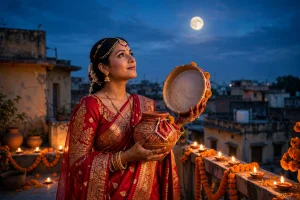
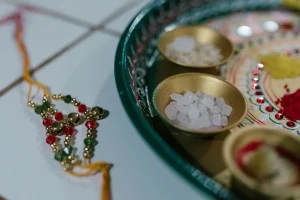
- The tilak ceremony: The brother sits facing east or north. The sister applies a tilak of roli (vermilion) on his forehead, places akshat (unbroken rice grains) on it, performs aarti with a lit diya, and prays for his long life and prosperity.
- Sweets and coconut: The sister offers sweets and a dry coconut (gola), and the brother tastes the sweets she serves.
- Gifts and promises: The brother gives a gift, sweets or cash to his sister and promises to protect her. In many families, the sister also gives a gift to her brother.
- The family meal: The day ends with a festive family meal, often cooked by the sister, and visits between families.
| Thali item | Meaning |
|---|---|
| Roli (vermilion) | Used for the tilak, a mark of blessing and protection |
| Akshat (unbroken rice) | Symbol of prosperity and a firm, unbroken life |
| Diya (lamp) | Light that removes darkness and ignorance |
| Dry coconut (gola) | Symbol of the brother’s strength and resilience |
| Sweets | A wish that the sibling bond stays sweet |
| Betel leaves and nuts | Traditionally used to invite the deities to witness the bond |
Bhai Dooj Across India
| Region | Name | How it is observed |
|---|---|---|
| North India | Bhai Dooj | Tilak, aarti, sweets and gifts, as described above |
| West Bengal | Bhai Phonta | Sister applies a sandalwood tilak (phonta), chants a blessing for her brother’s long life, and serves a feast |
| Maharashtra | Bhau Beej | Brother visits the sister’s home, tilak and aarti, followed by a special meal |
| Nepal | Bhai Tika | Seven-coloured tika, garlands of marigold and makhmali flowers, and a feast |
| South India | Observed in some communities | Simpler observance, often folded into the Diwali week |
Customs vary by family and region. Follow your own family tradition where it differs from the general pattern above.
Bhai Dooj and the Desi Calendar
Bhai Dooj falls in the desi month of Katak (Kartik in the Hindu calendar), the month that follows Assu. Katak is the autumn month in Punjab, when the days grow shorter and the harvest season winds down. Because Bhai Dooj follows the lunar calendar while the desi months are solar, its Gregorian date moves each year, but it always lands in the Kartik/Katak season.
In the Diwali sequence, Bhai Dooj closes the festival: Dhanteras (Friday, 6 November), Choti Diwali (Saturday, 7 November), Diwali (Sunday, 8 November), Govardhan Puja (Tuesday, 10 November), and Bhai Dooj (Wednesday, 11 November). Note that Govardhan Puja falls on 10 November this year, so the five days span 6 to 11 November.
Bhai Dooj Dates in Coming Years
| Year | Day | Date |
|---|---|---|
| 2026 | Wednesday | 11 November 2026 |
| 2027 | Sunday | 31 October 2027 |
| 2028 | Thursday | 19 October 2028 |
| 2029 | Wednesday | 7 November 2029 |
Future dates follow panchang calculations and can shift slightly with local panchang rulings. Confirm closer to the festival.
Frequently Asked Questions
When is Bhai Dooj in 2026?
Bhai Dooj 2026 falls on Wednesday, 11 November 2026. It is observed on Dwitiya, the second day of the Shukla Paksha in the Hindu month of Kartik, and it is the fifth and final day of the five-day Diwali festival.
What is the tilak muhurat for Bhai Dooj 2026?
For New Delhi, the Bhai Dooj tilak muhurat (Aparahna window) is 1:10 PM to 3:20 PM on Wednesday, 11 November 2026, a duration of 2 hours 10 minutes. Timings shift slightly by city, so check a local panchang for your location.
Why is Bhai Dooj on 11 November and not 10 November?
The Dwitiya tithi begins at 2:00 PM on Tuesday, 10 November, but the tilak is performed in the afternoon (Aparahna) window. Dwitiya is still running during that window on 11 November, so the festival is observed on the 11th. Looking only at the tithi start can produce the wrong civil date.
What is the difference between Bhai Dooj and Raksha Bandhan?
Both festivals celebrate the bond between brothers and sisters. Raksha Bandhan falls in the month of Shravan (July or August) and centres on the sister tying a rakhi thread on her brother’s wrist. Bhai Dooj falls in Kartik, just after Diwali, and centres on the sister applying a tilak on her brother’s forehead.
Is Bhai Dooj a public holiday?
Bhai Dooj is not a national holiday in India. Some states list it as a public or restricted holiday, while many offices and schools treat it as a regular working day. Check your state government holiday notification for the final position.
What should a sister keep in the Bhai Dooj thali?
A typical Bhai Dooj thali holds roli (vermilion) for the tilak, akshat (unbroken rice grains), a lit diya, sweets, a dry coconut (gola), and betel leaves with nuts. Families add their own regional items, so the thali varies by tradition.