Tulsi Vivah 2026: Date, Puja Muhurat, Vidhi and Significance
Tulsi Vivah is the ceremonial wedding of the sacred Tulsi plant to Lord Vishnu, worshipped as Shaligram. In 2026, Tulsi Vivah falls on Saturday, 21 November, on Kartik Shukla Dwadashi, the day after Devuthani Ekadashi. The Tulsi plant is decorated as a bride, the wedding rites are performed in the evening, and the festival marks the end of Chaturmas and the opening of the Hindu wedding season.
When Is Tulsi Vivah in 2026?
Tulsi Vivah 2026 is on Saturday, 21 November 2026. It is observed on Kartik Shukla Dwadashi, the twelfth day of the bright fortnight of the month of Kartik, one day after Devuthani Ekadashi on Friday, 20 November 2026, when Lord Vishnu is believed to wake from his four month rest during Chaturmas.
Some families and temples hold the ceremony on Ekadashi itself, and others on any day between Ekadashi and Kartik Purnima, which falls on Tuesday, 24 November 2026. The Dwadashi date is the most commonly observed one, so follow your family tradition or your local temple schedule if it differs.
Tulsi Vivah 2026 Date and Muhurat
The timings below follow the New Delhi reference used by mainstream panchang publishers. Sunset and the evening window shift by a few minutes from city to city, so check a local panchang for your exact muhurat.
| Event | Date and Time (IST) |
|---|---|
| Tulsi Vivah | Saturday, 21 November 2026 |
| Hindu date | Kartik Shukla Dwadashi |
| Dwadashi tithi begins | 6:31 AM, Saturday, 21 November 2026 |
| Dwadashi tithi ends | 4:56 AM, Sunday, 22 November 2026 |
| Devuthani (Prabodhini) Ekadashi | Friday, 20 November 2026 |
| Ceremony window | Evening after sunset, Pradosh Kaal, Saturday, 21 November 2026 |
| Kartik Purnima (last day of the window) | Tuesday, 24 November 2026 |
What Is Tulsi Vivah?
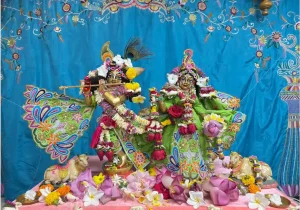
Tulsi Vivah means the wedding of Tulsi. Tulsi, or holy basil, is worshipped daily in Hindu homes, usually in a courtyard shrine called a Tulsi Vrindavan. On this day, the plant takes the role of the bride, and Lord Vishnu, in the form of a Shaligram stone or an image of Vishnu or Krishna, takes the role of the groom.
The story comes from the Padma Purana. Tulsi was Vrinda, the devoted wife of the demon king Jalandhar. Her devotion made Jalandhar invincible, and the gods could not defeat him. Lord Vishnu took Jalandhar’s form to break that protection, and when Vrinda realised the truth, she cursed Vishnu to become a black stone, the Shaligram. Vishnu blessed her in return, saying she would be worshipped as the Tulsi plant and married to him as Shaligram every year. Tulsi Vivah re-enacts that wedding, and it is why Tulsi leaves are offered in Vishnu worship to this day.
The festival also carries a practical meaning. Chaturmas, the four month period when weddings and other auspicious ceremonies are paused, ends with Devuthani Ekadashi. Tulsi Vivah the next day is therefore treated as the first wedding of the season, and performing it is believed to carry the merit of Kanyadaan, giving away a daughter in marriage. Couples without a daughter often sponsor the rite and play the role of the bride’s parents.
How to Perform Tulsi Vivah Puja at Home
You do not need a temple to perform Tulsi Vivah. Most households follow a familiar sequence in the evening, although regional practice varies, especially in Maharashtra and Gujarat, where the ceremony can be elaborate and community based.
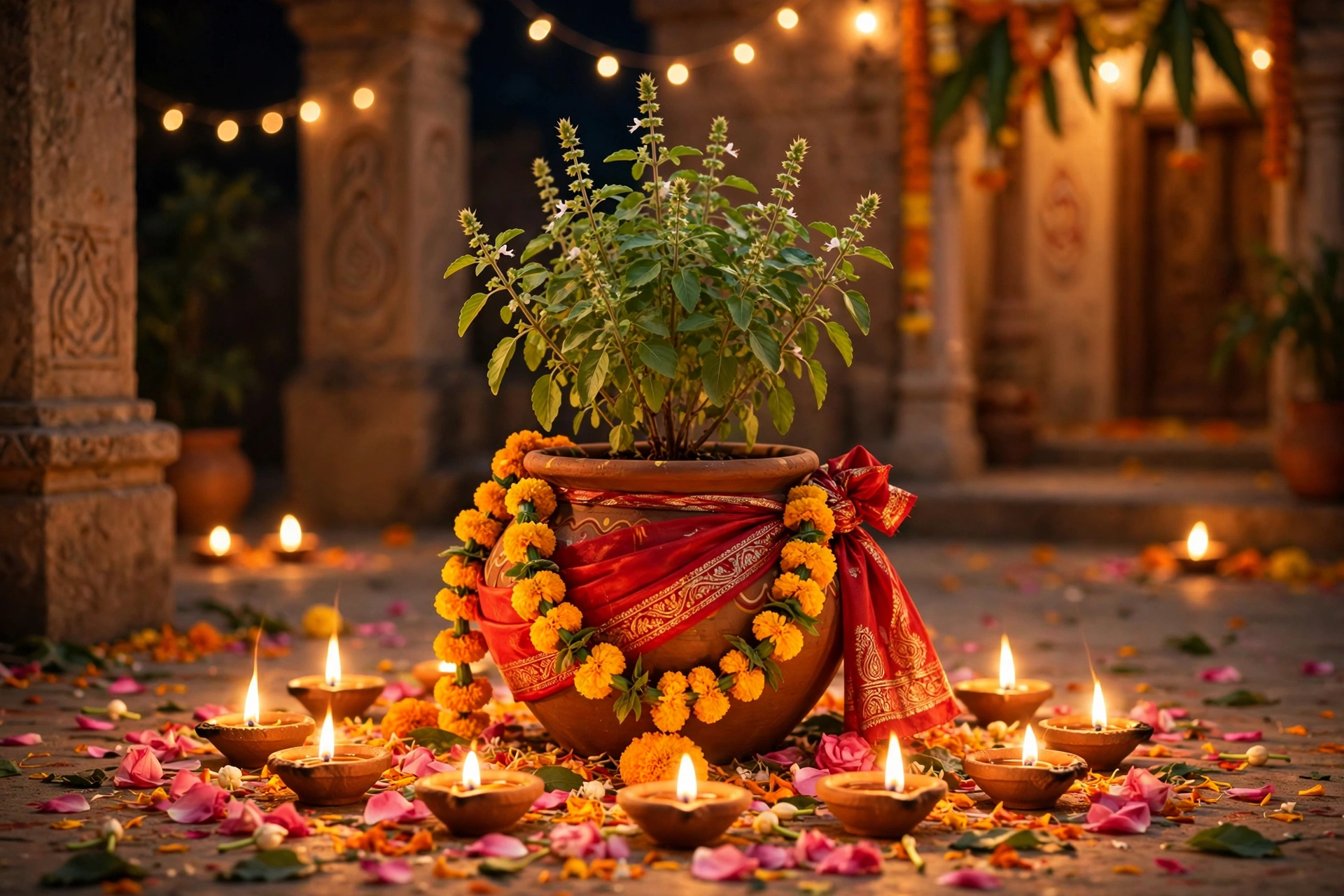
Clean and decorate: Clean the Tulsi Vrindavan, draw a rangoli around it, and decorate the plant as a bride with a red cloth or saree, jewellery, flowers and marigold garlands. Place the Shaligram or Vishnu image beside it as the groom, dressed in a dhoti and garland.
Prepare the mandap: Set up a small wedding canopy over the Tulsi plant and the groom, with diyas, incense and flowers around it.
Ganesh Puja: Begin with a prayer to Lord Ganesha, then worship Tulsi and Vishnu together with flowers, kumkum, haldi and sweets.
Wedding rites: Link the bride and groom with a sacred cotton thread, recite the wedding mantras, and sprinkle rice and kumkum on the couple, as at a human wedding. In Maharashtra, a white cloth is held between plant and stone while the Mangalashtaka verses are chanted, and dropped on the last verse as guests shower coloured rice.
Kanyadaan and aarti: Perform Kanyadaan, offer the bride gifts of saree, jewellery and sweets, then perform aarti and distribute prasad. The feast that follows traditionally includes seasonal offerings such as sugarcane, coconut sweets and peanuts.
Samagri (puja items): Keep the following ready before the evening ceremony.
| Item | Use in the Puja |
|---|---|
| Tulsi plant in a Vrindavan pot | The bride |
| Shaligram stone or Vishnu/Krishna image | The groom |
| Red cloth or small saree, jewellery, garlands | Decorating the bride |
| Dhoti and garland for the groom | Decorating the groom |
| Diyas, incense, flowers, kumkum, haldi | Worship and decoration |
| Rice, sugarcane, coconut sweets, peanuts | Offerings and prasad |
| Sacred cotton thread | Linking bride and groom |
Tulsi Vivah and the Desi Calendar
In the solar Punjabi calendar, Tulsi Vivah 2026 falls in the desi month of Maghar, which begins with Maghar Sangrand on Monday, 16 November 2026. In the lunar reckoning, it is the Dwadashi of the month of Kartik. The festival sits inside a busy week: Devuthani Ekadashi on Friday, 20 November, Tulsi Vivah on Saturday, 21 November, and Kartik Purnima on Tuesday, 24 November. See our Dev Deepawali 2026 guide for the Kartik Purnima celebrations in Varanasi, our Gurpurab 2026 guide for the same full moon in the Sikh tradition, our Diwali 2026 guide for the festival that opens this season, and our Maghar month page for the month’s dates and traditions.
Tulsi Vivah Dates in Coming Years
Planning ahead? Here are the Tulsi Vivah dates for the last two years and the next year:
| Year | Day | Date |
|---|---|---|
| 2024 | Wednesday | 13 November 2024 |
| 2025 | Sunday | 2 November 2025 |
| 2026 | Saturday | 21 November 2026 |
| 2027 | Wednesday | 10 November 2027 |
Note: in 2027, some traditions observe Tulsi Vivah on Ekadashi itself, so confirm the 2027 date with a local panchang closer to the time.
Frequently Asked Questions
When is Tulsi Vivah in 2026?
Tulsi Vivah 2026 falls on Saturday, 21 November 2026. It is observed on Kartik Shukla Dwadashi, the day after Devuthani Ekadashi on Friday, 20 November 2026.
What is the Tulsi Vivah muhurat in 2026?
The ceremony is traditionally performed in the evening after sunset, during Pradosh Kaal, on Saturday, 21 November 2026. The Dwadashi tithi runs from 6:31 AM on 21 November to 4:56 AM on 22 November 2026 (IST, New Delhi reference), so check a local panchang for your exact evening window.
What is Tulsi Vivah?
Tulsi Vivah is the ceremonial wedding of the sacred Tulsi plant, decorated as a bride, to Lord Vishnu, worshipped as Shaligram. It re-enacts the story of Vrinda, who became the Tulsi plant, and her annual marriage to Vishnu.
Why does Tulsi Vivah mark the start of the wedding season?
Chaturmas, the four month period when weddings are paused, ends with Devuthani Ekadashi. Tulsi Vivah the next day is treated as the first wedding of the season, so Hindu weddings resume after it.
Can Tulsi Vivah be performed on a different day?
Yes. Some families and temples hold the ceremony on Ekadashi itself, and others on any day between Ekadashi and Kartik Purnima, which falls on Tuesday, 24 November 2026. Dwadashi is the most commonly observed day.
When is Tulsi Vivah in 2027?
Tulsi Vivah in 2027 falls on Wednesday, 10 November 2027. Some traditions observe it on Ekadashi itself in 2027, so confirm with a local panchang closer to the time.