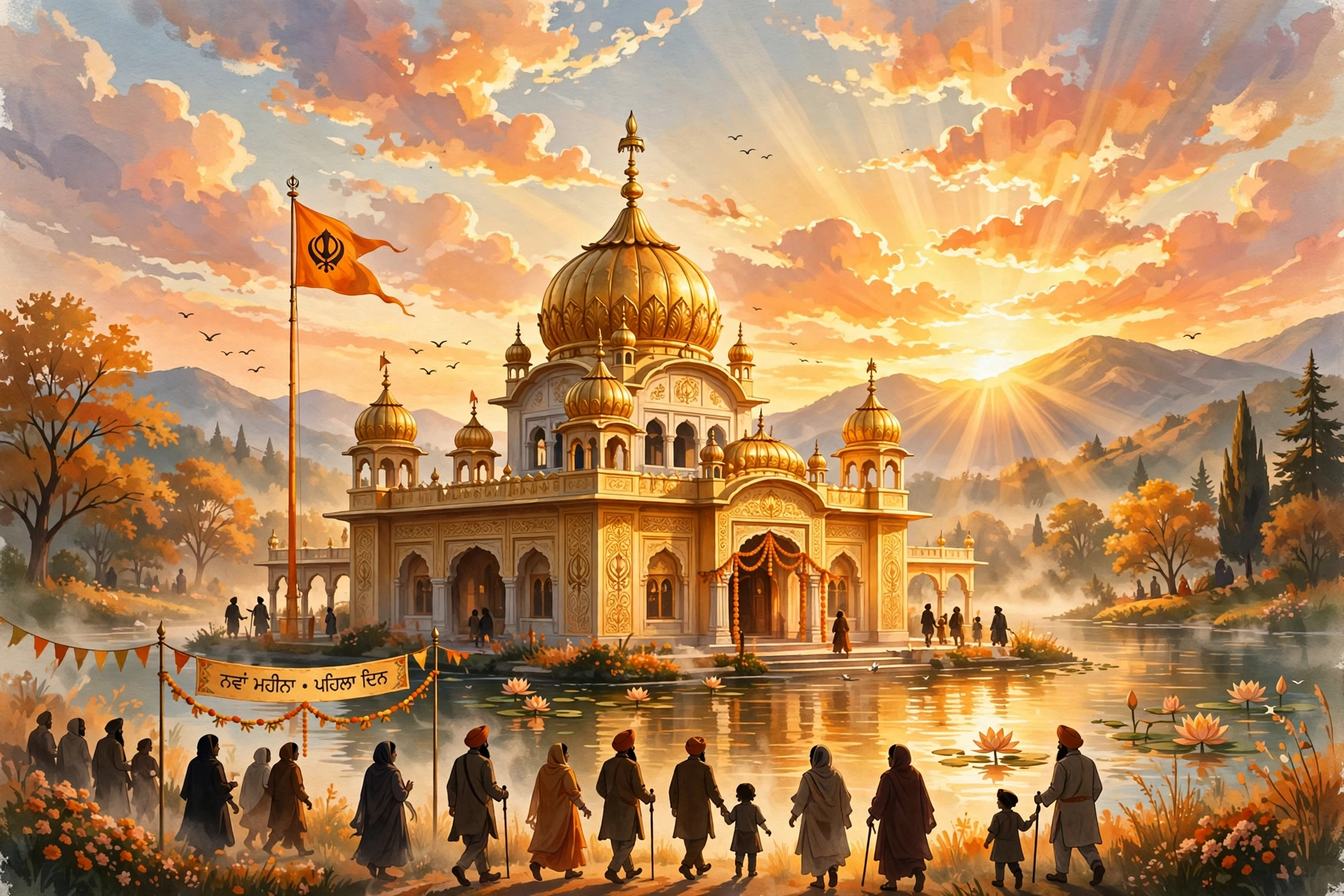
What Is Sangrand? Meaning and Observance
If you are from Punjab, you have surely heard your elders mention Sangrand. Some say a certain task should not be done on Sangrand, others say you should visit the gurdwara on Sangrand day, and the word turns up in old sayings and family advice. But what actually is Sangrand? This article explains it in full.
The Definition of Sangrand
Sangrand is the first day of every desi month. The desi calendar has 12 months, from Chet to Phagun, and the day on which each month begins is called that month's Sangrand. For example, the day Sawan begins is Sawan's Sangrand, and the day Assu begins is Assu's Sangrand.
The word Sangrand comes from a Sanskrit term meaning the sun's entry from one zodiac sign into another. Since the desi calendar is solar, the start of each month actually marks the sun's move to a new position. That is why Sangrand is considered the first day of a new phase of nature.
The best-known Sangrand in India is the one in the month of Magh, celebrated across the country as Makar Sankranti. It shows how the same solar turning point is honored in many regional traditions under different names.
The exact Sangrand dates for every month are listed on our Sangrand dates page.
The Importance of Sangrand in Sikh Tradition
Sangrand holds the greatest importance in Sikh religious tradition, for several reasons:
Religious gatherings: On Sangrand day, many gurdwaras hold special diwans. The congregation gathers, kirtan is performed, and ardas is offered. In some areas, a special langar is also organized on Sangrand, and the whole sangat shares the meal together.
Spiritual resolve: Treating Sangrand as the start of a new month, many people resolve on this day to adopt a good habit or give up a bad one. It is seen as a day of spiritual preparation for the month ahead, a monthly checkpoint for one's conduct.
Historical references: The Guru Granth Sahib contains the Baarah Maahaa composition, which describes the spiritual mood of each month. In this context, Sangrand is seen as the doorway into each month's spiritual mood.
It is also important to understand that Sikh teachings emphasize remembering God every day, and that no day is inauspicious or bad in itself. The importance of Sangrand is traditional and communal: it is an occasion for the congregation to gather and take stock of the month.
How Is Sangrand Observed?
There is no single mandatory way to observe Sangrand, but these customs are commonly seen across Punjab:
- Visiting the gurdwara: Going to the gurdwara early in the morning, bowing the head, and listening to kirtan is the most common tradition, and many families make it a monthly habit.
- Charity: Feeding the poor or giving donations on this day is considered virtuous, and some people set aside a fixed amount for charity every Sangrand.
- Cleaning the home: Many families clean their homes before Sangrand so the new month begins in purity, treating it like a fresh start for the household.
- Starting new work: Farmers and traders often begin new ventures on Sangrand day, considering it an auspicious day for undertakings that matter.
- Family gathering: In some families, everyone eats together on Sangrand day, turning the month's beginning into a small celebration at home.
The Difference Between Sangrand and the First of a Gregorian Month
The question also arises: when the 1st of a Gregorian month is also a month's beginning, what is special about Sangrand? The difference is that the Gregorian calendar is administrative, while the desi calendar is tied to nature. Sangrand is the day of the sun's actual astronomical shift in position, so it is connected to the seasons, the crops, and the natural cycle. That is why Sangrand has been part of both farming and religious life for centuries.
Misconceptions About Sangrand
A few misconceptions about Sangrand have also spread over time, and they deserve a clear answer:
- Misconception: No new work should be started on Sangrand day. Reality: On the contrary, many people consider Sangrand a good day for new beginnings. This is a difference of regional custom, not a religious ruling.
- Misconception: Sangrand is only a Sikh festival. Reality: Although it holds greater religious importance in Sikh tradition, the first day of the desi months is also recognized in Hindu and general Punjabi culture.
- Misconception: Every Sangrand is the same. Reality: Each month's Sangrand has its own season and mood. Sawan's Sangrand brings the rains, while Poh's Sangrand announces biting cold.
Frequently Asked Questions
How many times does Sangrand occur each month?
Sangrand occurs only once in each desi month, because it is the month's first day. There are 12 Sangrands in a year.
Does Sangrand fall on the same date every year?
Almost. Since the desi calendar is solar, each month's Sangrand falls around roughly the same Gregorian dates every year, give or take a day or two.
What is the difference between Sangrand and Masya?
Sangrand is the first day of the month, while Masya is the new moon night. Both hold religious importance, but they are different days. Masya dates can be seen here.
When is this month's Sangrand?
For each month's exact Sangrand date, see our Sangrand dates page, which is updated regularly.