Saphala Ekadashi 2027: Date, Parana Time, Vrat Katha and Significance
Saphala Ekadashi is the first Ekadashi of the new year, observed on the eleventh day of the dark fortnight of the month of Pausha. In 2027, Saphala Ekadashi falls on Sunday, 3 January. The name itself carries the blessing of the day: “Saphala” means fruitful or successful, and the fast is believed to make every good effort fruitful, wash away sins and open the way to success in the year ahead.
When Is Saphala Ekadashi in 2027?
Saphala Ekadashi 2027 is on Sunday, 3 January 2027. It is observed on Pausha Krishna Ekadashi, the eleventh tithi of the waning moon in the month of Pausha (in the amanta reckoning, Margashirsha Krishna Ekadashi). The Ekadashi tithi begins at 2:24 PM on Saturday, 2 January, and ends at 4:08 PM on Sunday, 3 January, so the fast is kept on Sunday, when the tithi is present at sunrise. Saphala Ekadashi falls in the desi month of Poh, on 19 Poh 2083 BS. In the USA and Canada, the fast falls a day earlier, on Saturday, 2 January 2027, because of the time difference.
Saphala Ekadashi 2027 Date and Timings
The timings below follow the India (IST) reference published by Drik Panchang for New Delhi. Timings shift from city to city because sunrise changes with location, so check a local panchang for your exact timings. The fast is broken the next morning, on Monday, 4 January, in the parana window given below.
| Event | Date and Time (IST) |
|---|---|
| Saphala Ekadashi | Sunday, 3 January 2027 |
| Hindu date | Pausha Krishna Ekadashi (purnimanta; amanta Margashirsha Krishna) |
| Also known as | Safala Ekadashi |
| Ekadashi tithi begins | 2:24 PM, Saturday, 2 January 2027 |
| Ekadashi tithi ends | 4:08 PM, Sunday, 3 January 2027 |
| Sunrise (New Delhi) | 7:14 AM, Sunday, 3 January 2027 |
| Sunset (New Delhi) | 5:37 PM, Sunday, 3 January 2027 |
| Nakshatra | Visakha until 8:25 AM, then Anuradha |
| Abhijit Muhurta | 12:05 PM to 12:46 PM, Sunday, 3 January 2027 |
| Rahu Kalam | 4:19 PM to 5:37 PM, Sunday, 3 January 2027 |
| Parana (breaking the fast) | Monday, 4 January 2027, 7:15 AM to 9:19 AM (New Delhi) |
| Dwadashi ends | About 6:15 PM, Monday, 4 January 2027 |
| Desi date | 19 Poh, 2083 BS (Poh runs 16 December 2026 to 14 January 2027) |
| Vikram Samvat | 2083 (Siddharthi) |
Parana Time by City
Parana, the breaking of the fast, is done on Monday, 4 January 2027, after sunrise and within Dwadashi, but not during Hari Vasara, the first quarter of Dwadashi. The windows below are local times for each city. In the USA and Canada, where the fast falls on Saturday, 2 January, parana is on Sunday, 3 January, in the afternoon (for example, New York 12:57 PM to 2:49 PM, Chicago 12:51 PM to 2:41 PM, Los Angeles 12:57 PM to 2:57 PM, Toronto 1:16 PM to 3:05 PM).
| City | Parana (Monday, 4 January 2027) |
|---|---|
| New Delhi | 7:15 AM to 9:19 AM |
| Mumbai | 7:13 AM to 9:25 AM |
| Hyderabad | 6:47 AM to 9:01 AM |
| Chennai | 6:32 AM to 8:49 AM |
| Bengaluru | 6:43 AM to 9:00 AM |
| Kolkata | 6:18 AM to 8:27 AM |
| London | 8:06 AM to 9:42 AM |
| Dubai | 7:05 AM to 9:13 AM |
| Singapore | 7:08 AM to 9:32 AM |
What Does Saphala Mean?
The word “Saphala” comes from “sa” (with) and “phala” (fruit), so it means “with fruit”, or fruitful and successful. The fast is kept for success in undertakings, and the Bhavishya Purana says that observing it with devotion washes away sins, removes obstacles and grants the merit of great charities and pilgrimages. It is a Vishnu fast, like every Ekadashi, and it is also a fitting way to begin the new year, since it is the first Ekadashi of 2027. The year 2027 carries 25 Ekadashis instead of the usual 24, because Saphala Ekadashi falls twice in the same calendar year, once at its start and once at its end.
The Story of Saphala Ekadashi
The story of Saphala Ekadashi is told in the Bhavishya Purana, where Lord Krishna narrates it to Yudhishthira. In the city of Champavati there lived a king named Mahishmati, who had four sons. The eldest, Lumpaka, lived a sinful life: he drank, gambled, ate meat and stole from his own people. His father warned him again and again, but Lumpaka did not change, and at last the king banished him from the kingdom. Lumpaka went to live in the forest, where he survived by stealing and by eating whatever he could find, and his sins only grew heavier.
One day, on the Ekadashi of the dark fortnight of Pausha, Lumpaka was weak with hunger and cold. He had eaten nothing all day, and as night fell he took shelter under a peepal tree and stayed awake through the night, shivering and without food. He did not know it, but he had kept the Saphala Ekadashi fast and vigil without intending to, and the merit of that unintentional observance wiped away his sins. The next morning his life began to change. He returned to his father, who forgave him, and he ruled the kingdom justly for many years. At the end of his life, the story says, he attained Vaikuntha, the abode of Lord Vishnu. The lesson of the story is that even an unknowing observance of Ekadashi carries great merit, and that a sincere fast kept with devotion carries far more.
How to Observe the Saphala Ekadashi Vrat
The vrat rules below are the ones most families follow. Customs vary between families and traditions, so follow your family practice.
The fast: The fast runs from sunrise on Sunday, 3 January until parana on Monday morning. Grains, wheat, rice, beans and lentils are avoided from sunrise on Ekadashi until parana. Fruit, milk and yoghurt, nuts, potatoes and other root vegetables, sabudana and rock salt (sendha namak) are usually allowed. Some devotees keep a full nirjala fast, without food or water, and break it at parana.
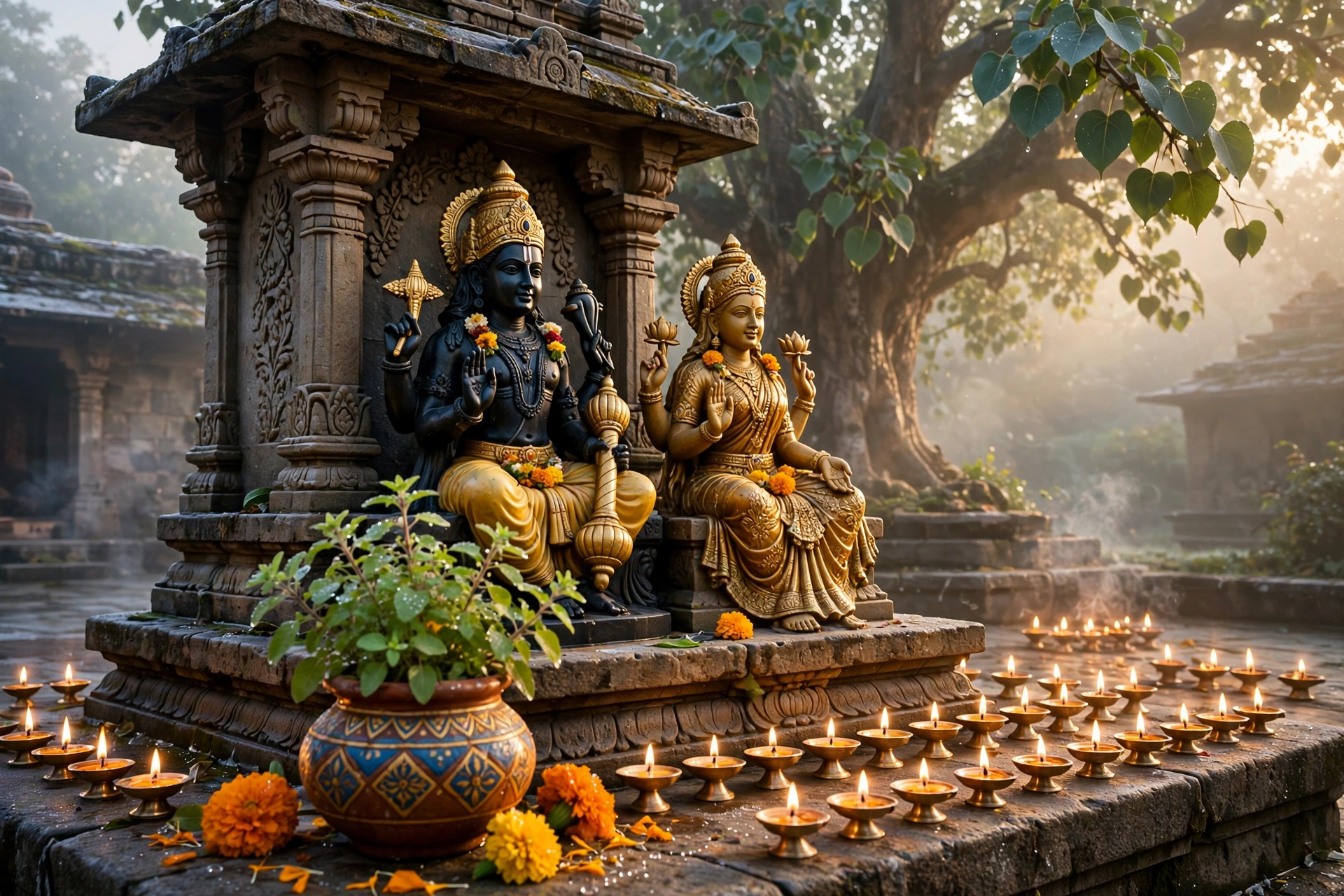
Puja: Worship Lord Vishnu with tulsi leaves, a lamp and flowers. Offer tulsi water and fruit as naivedya. Chant “Om Namo Bhagavate Vasudevaya” and read or listen to the Saphala Ekadashi katha. Many families read the story of Lumpaka in the evening and stay awake for part of the night in prayer, as the night vigil is part of the observance.
Parana: Break the fast on Monday, 4 January, in the parana window after sunrise, within Dwadashi and after Hari Vasara has ended. In New Delhi the window is 7:15 AM to 9:19 AM. Break the fast with a simple meal, often starting with tulsi water, and do not break it during Madhyahna (midday). Those who cannot fast for health reasons, such as children, the elderly and the unwell, may observe the day with prayer, charity and a simple diet instead.
Saphala Ekadashi Dates in Coming Years
| Year | Day | Date |
|---|---|---|
| 2026 | Wednesday | 14 January 2026 (previous) |
| 2027 | Sunday | 3 January 2027 |
| 2027 | Thursday | 23 December 2027 (second Saphala Ekadashi of 2027) |
Note: the dates above follow the purnimanta (North Indian) reckoning from Drik Panchang, which keeps the fast on the day the Ekadashi tithi is present at sunrise. Vaishnava (ISKCON and similar) calendars sometimes keep the fast a day later, and in the USA and Canada the Smarta fast for January 2027 falls on Saturday, 2 January. Confirm the date with a local panchang closer to the time. See our Utpanna Ekadashi 2026 guide for the Ekadashi four weeks earlier, our Gita Jayanti 2026 guide for Mokshada Ekadashi and Vaikuntha Ekadashi on 20 December, and our Devutthana Ekadashi 2026 guide for the Ekadashi that opens the wedding season.
Frequently Asked Questions
When is Saphala Ekadashi in 2027?
Saphala Ekadashi 2027 is on Sunday, 3 January 2027 in India, per Drik Panchang. It falls on Pausha Krishna Ekadashi, the eleventh tithi of the dark fortnight of the month of Pausha. It is the first Ekadashi of the year 2027.
What is the parana time for Saphala Ekadashi 2027?
In New Delhi, the fast is broken on Monday, 4 January 2027 between 7:15 AM and 9:19 AM, after sunrise and within Dwadashi, once Hari Vasara has ended. Parana times change by city, so check the city table above or a local panchang for your own window.
What does Saphala mean?
Saphala comes from “sa” (with) and “phala” (fruit), so it means fruitful or successful. The fast is believed to make good efforts fruitful, wash away sins and remove obstacles, which is why it is a fitting observance to begin the new year.
What is the story of Saphala Ekadashi?
As told in the Bhavishya Purana, King Mahishmati of Champavati banished his sinful son Lumpaka, who lived in the forest as a thief. On Saphala Ekadashi night, hungry and cold, Lumpaka stayed awake under a peepal tree without food, and that unintentional fast wiped away his sins. He returned home, ruled justly and at last attained Vaikuntha.
Is Saphala Ekadashi in 2027 on a different date in the USA?
Yes. In the USA and Canada, the Smarta fast falls on Saturday, 2 January 2027, a day earlier than in India, because of the time difference. Vaishnava calendars in New York and New Jersey keep Sunday, 3 January. Parana in the USA is on Sunday, 3 January, in the afternoon.
Why does Saphala Ekadashi fall twice in 2027?
Saphala Ekadashi falls on Sunday, 3 January 2027 and again on Thursday, 23 December 2027, because the lunar year does not line up exactly with the Gregorian year. That is why 2027 has 25 Ekadashis instead of the usual 24. Both belong to Pausha Krishna Paksha, yet they sit in different lunar years.